.svg)
.svg)
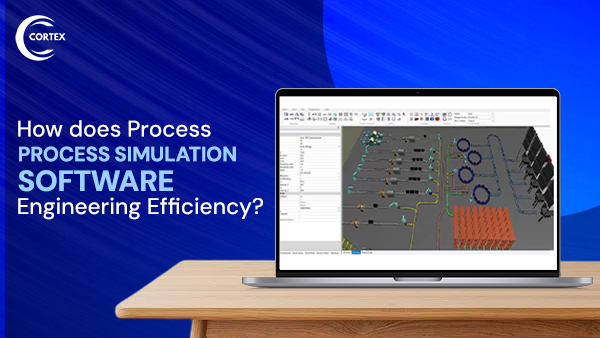
Engineers know very well how it feels when they make a very costly design error, experience an unexpected equipment failure, or have their projects delayed. This sequence of events is highly stressful, identifying a lack of predictability across the many teams that must deal with system complexity.
A roadblock emerges with no real way for the personnel to make long-term predictions. Performing manual calculations takes way too long and introduces too many possible errors. Testing a physical piece of equipment in the real world can become too expensive and risky.
In many cases, allowing an engineer to simulate their process using process simulation software can be beneficial. It can effectively remove all of these risks. Thus, the engineer can implement their designs in a simulated environment at no cost for physical materials or labour.
By using process simulation software on a project, an engineer can considerably decrease project delivery times, costs, and risks associated with process design.
Simulation software in general creates a virtual model of a real engineering process. Engineers can use it to visualise and analyse how fluids flow, how systems respond to changes, and how equipment performs optimally.
They can easily get the big picture when using process simulation software before making changes in the field, which may be pretty costly. Everything from steady-state to dynamic systems is covered. Complex tasks such as pipeline pressure-drop calculations and network modelling will also fit in.
Process simulation software delivers measurable advantages that directly affect project outcomes. By using these tools, engineers realise the competitive advantages of faster delivery, lower costs, and better safety records.
Understanding these core benefits helps teams make informed decisions regarding where to use simulation in their workflows. Now, let's explore how this technology transforms engineering efficiency.
Simulation of "what-if" scenarios helps engineers identify risks and fix issues that could damage equipment or halt production. Virtual commissioning can predict safety hazards before they become apparent in real environments, especially those related to emergency shutdowns or extreme conditions that are too dangerous to test physically. A reduction in workplace incidents and equipment damage has been reported by companies using virtual testing.
Simulation-based software reduces costs by identifying problems early, avoiding waste, and eliminating the need for additional prototypes. According to industry data, 10–15% throughput gains and up to 20% energy savings are achieved through simulation-based optimisation. Development times are reduced by 20–60%, enabling faster project cycles. For a manufacturer, engineering efficiency gained from process simulation was 60%. In general, digital validation reduces prototyping, scrap, and operational costs.
Simulation enhances design by enabling swift evaluation of multiple alternatives in terms of energy efficiency and system performance. Engineers can virtually test fluid network configurations, size pumps, and optimise schemes.
Chemical plants use it to refine reactor conditions, maximising yield with minimum energy consumption. Hundreds of configurations can be tested in days; design flaws are discovered much earlier in the design process, thereby avoiding far more costly fixes later on.
Simulation offers insights through data that enhance planning and achieve strict standards. Pressure-surge analysis is one such tool that ensures operational safety. Advanced platforms now achieve excellent prediction accuracy, guiding equipment choices, process conditions, and system changes.
Simulations also help ensure regulatory compliance, support emission modelling, facilitate operator training, and foster team collaboration while reducing uncertainty and increasing confidence in project proposals.
Process simulation software is about changing the engineering approach towards complex technical challenges. These tools are adaptable across various engineering disciplines, from chemical processing to fluid mechanics. Engineers use simulation in a wide range of applications to speed up workflows and solve specific problems.
Here are the key areas where simulation has the most significant impact on engineering workflow optimisation –
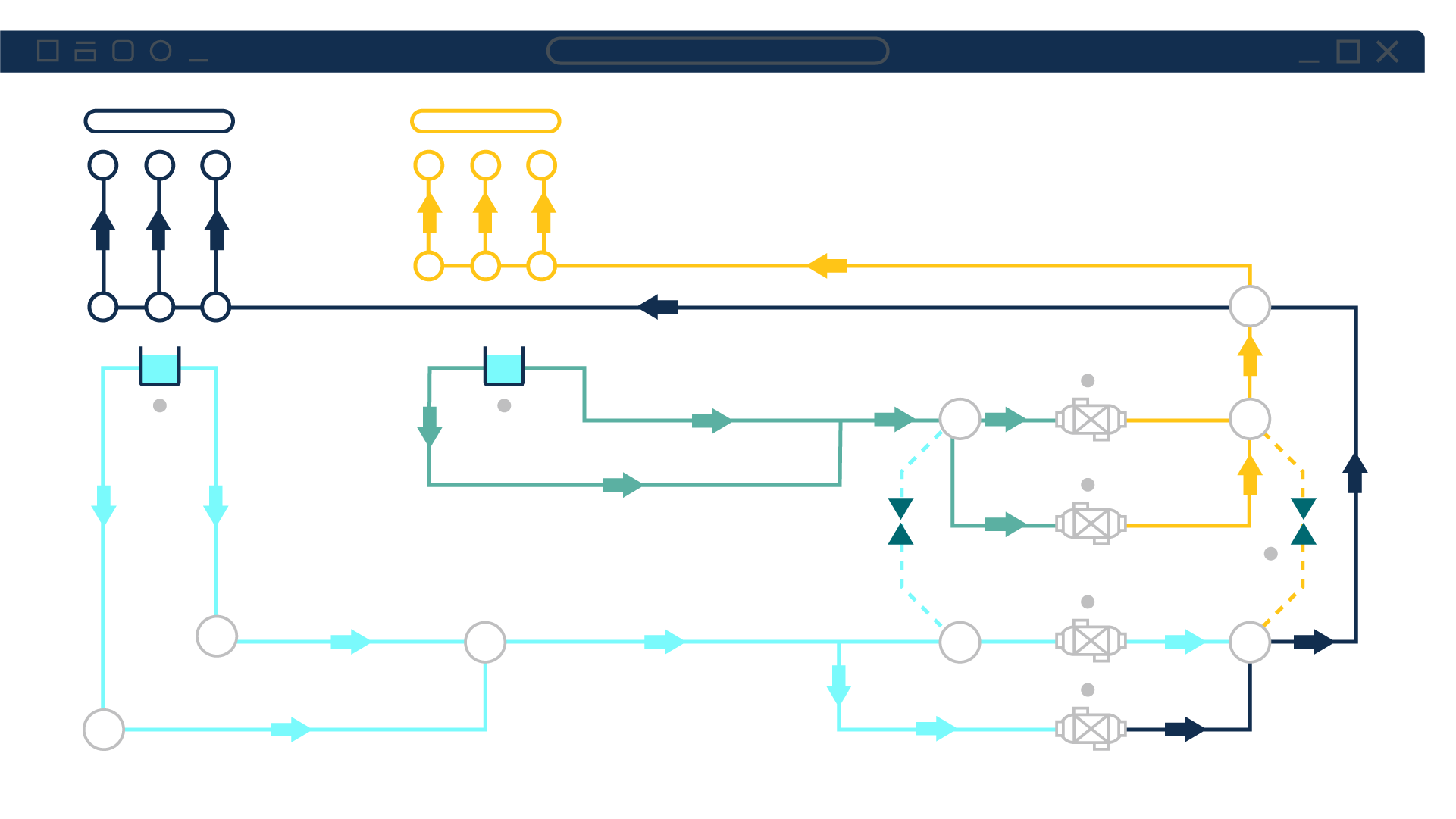
Fluid flow and hydraulic modelling tools enable engineers to study fluid motion, pressure, and system efficiency. Fathom uses the Bernoulli Equation, the Reynolds Number, and the Newton-Raphson iteration to calculate pressure drops and flow distribution in liquid and low-velocity gas systems.
It helps industries such as water treatment and mining optimise operations by identifying bottlenecks and evaluating performance changes. The software also ensures that fire suppression systems meet NFPA standards by assessing firewater pressure and flow needs.
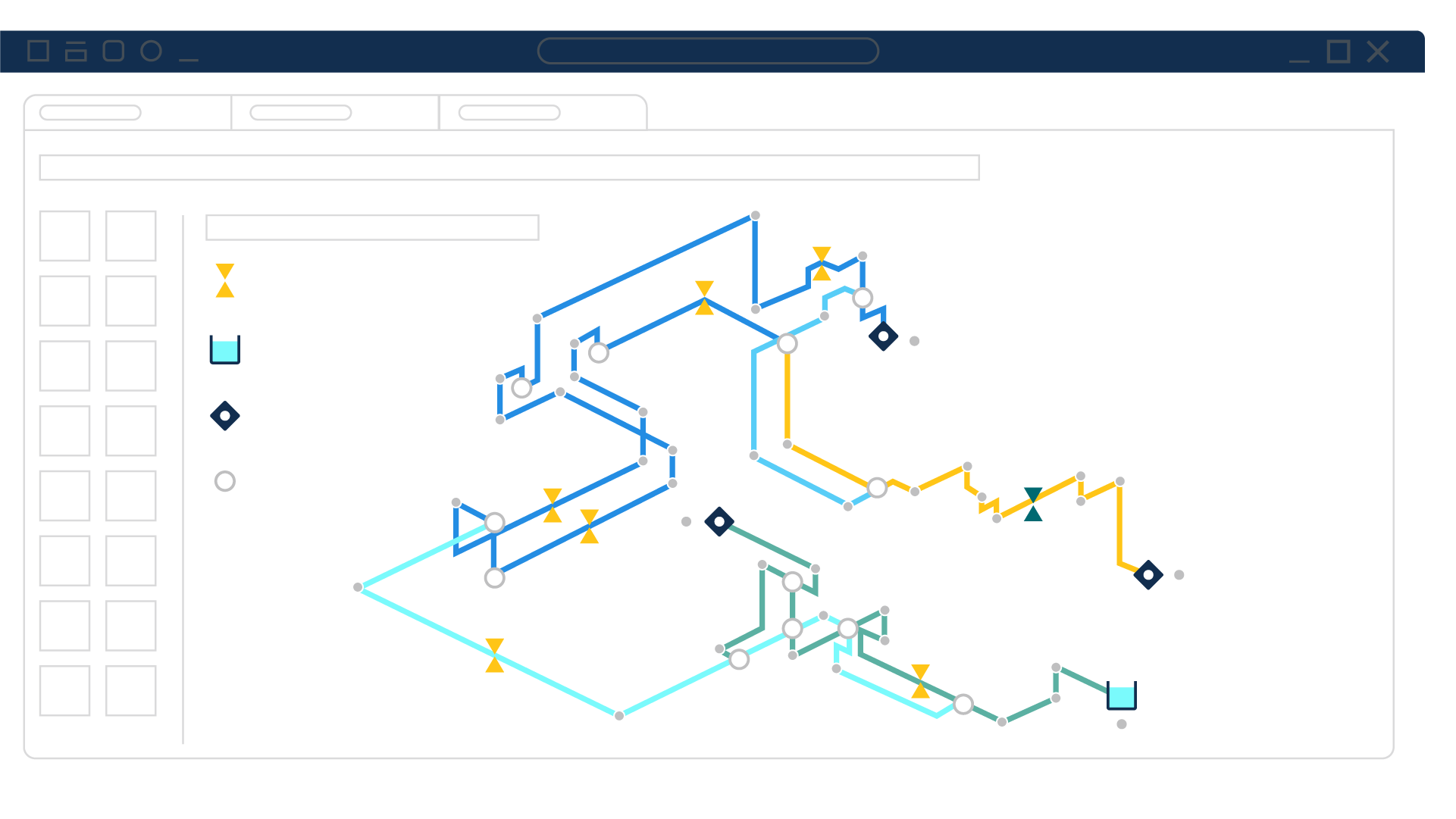
Transient flow analysis programs, such as Impulse, simulate pressure surges and flow transitions that can damage systems. The Method of Characteristics is used in the software to simulate the propagation and stabilisation of surge waves.
Engineers test scenarios such as rapid valve closures, pump trips, and emergency shutdowns to prevent pressure spikes. It also helps size surge protection devices and protect equipment during transient events.
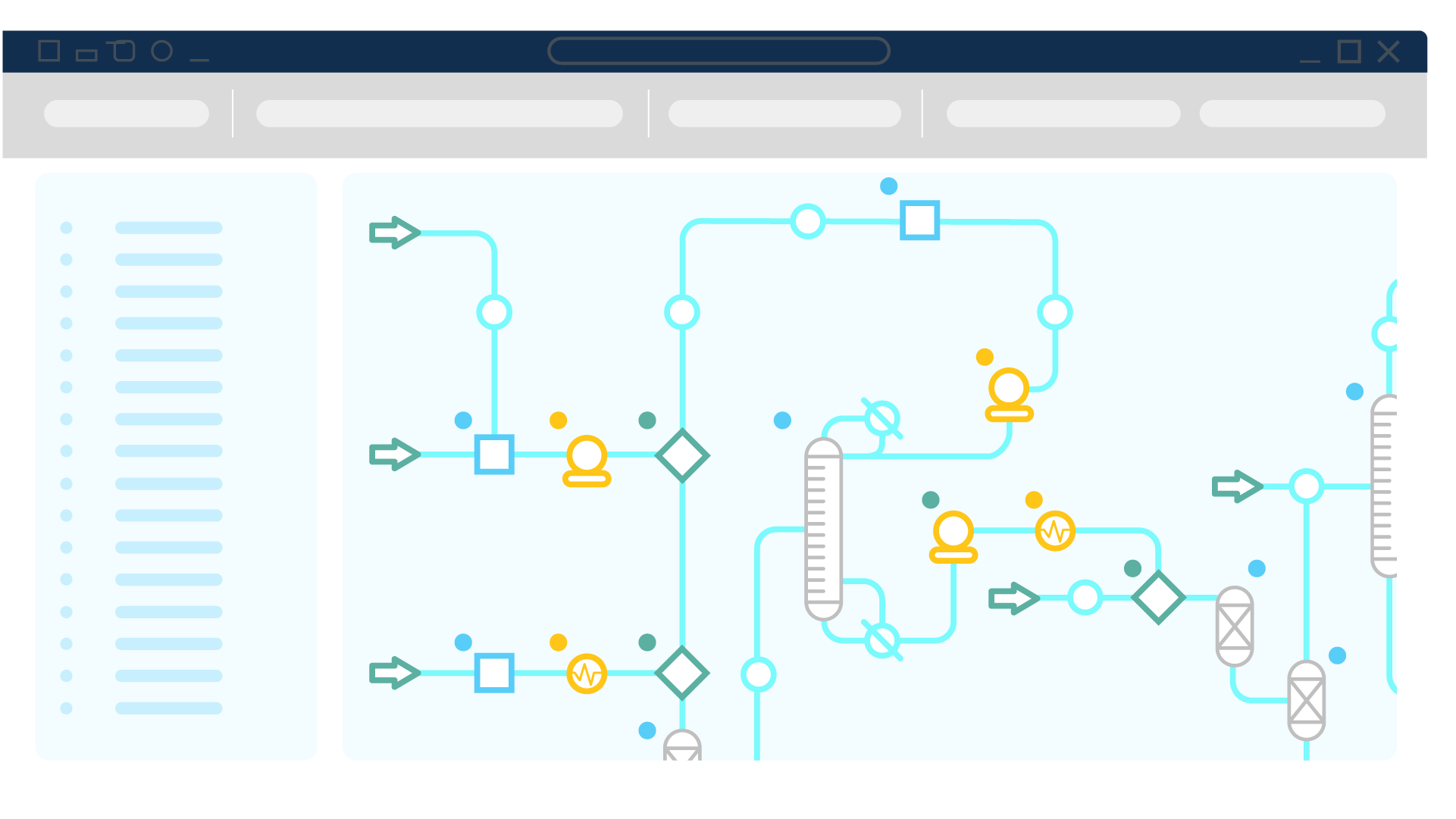
ChemCAD is a process simulation tool for chemical engineers. It models a range of unit operations and handles detailed thermodynamic, heat, and mass balance calculations. It also performs steady-state and dynamic simulations of chemical processes, such as reactors, distillation columns, and heat exchangers.
It also features equipment design and sizing. Common industries in which it may be used include oil and gas, chemicals, pharmaceuticals, and renewable energy. Pressure-drop and hydraulic calculations within ChemCAD are rudimentary, and ChemCAD should not be used for detailed piping network analysis or hydraulic modeling. For that, users have special fluid flow tools such as Fathom or Arrow.
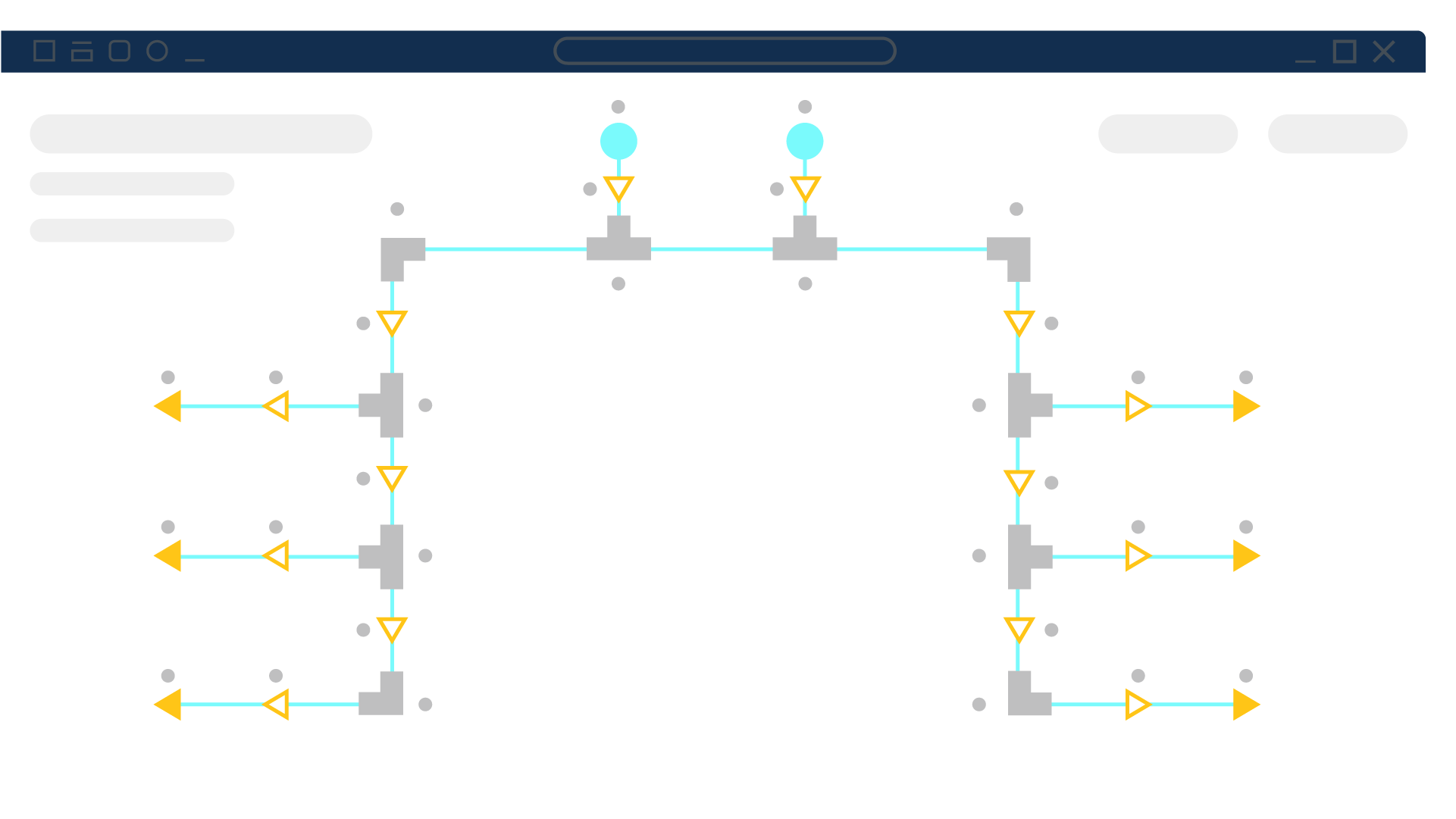
The design of the gas systems requires analysis of compressible flow due to significant changes in density and temperature. Gas and vapour flow is modelled using Arrow to design distribution networks, compressed air systems, and vapour recovery units.
Thermal effects are calculated, and choking conditions are avoided. Arrow helps engineers optimise pipe sizing and select equipment for gas-handling applications.
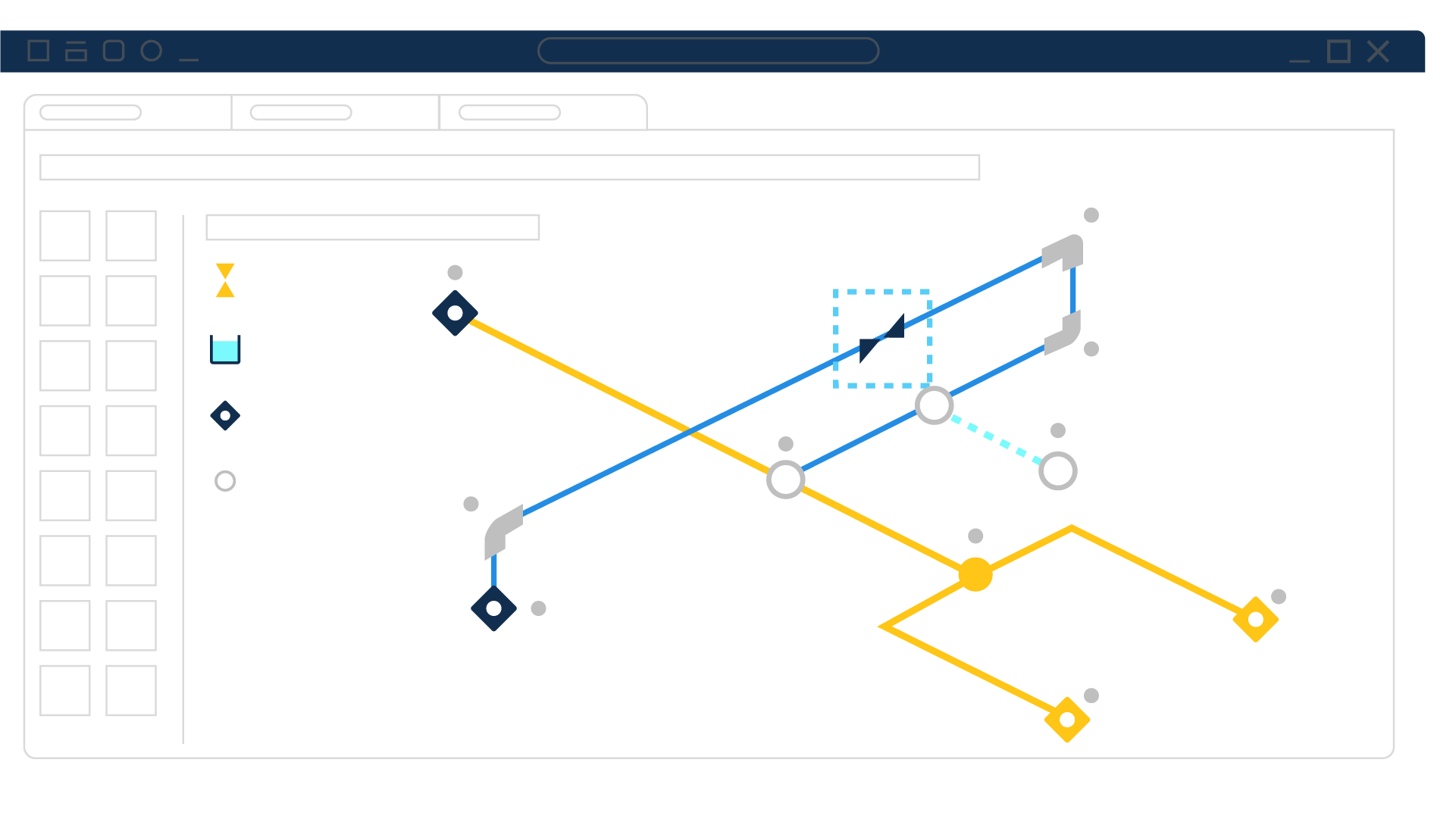
Because gas and steam networks change rapidly during upsets, shutdowns, or equipment trips, steady-state tools cannot predict these time-varying compressible events. However, the xStream technology was specifically developed to model time-varying compressible events via the effects of pressure waves, shock pressure, thermal transfer, and temperature-pressure "sonic choke" effects.
The use of timed and event-based triggers in the modelling tool allows the simulation of valve and damper positions, trip events, and emergency shutdowns, enabling technicians to evaluate procedures and ensure safety before executing them at the facility.
Process simulation software helps teams reduce energy costs while improving sustainability. Engineers balance performance and resource use with optimal designs and thermal data analysis. Improved energy efficiency is a significant environmental and economic challenge across the food and beverage, chemical, and pulp and paper industries.
Exergy analysis gauges thermodynamic inefficiencies in processes and utility systems. The software performs energy and exergy balances for whole plants or individual pieces of equipment, highlighting the irreversibilities that waste energy. Tools for process economic evaluation provide an explicit view of the operating cost of raw materials, utilities, heating and cooling, electricity, and waste effluents.
Companies save a lot through simulation-based energy optimisation. Data indicates they can save up to 20% by following the simulation results.
Simulation allows teams to test new equipment and process changes virtually before committing to them. This helps drive down R&D costs and meet environmental requirements. Combustion and methanization modelling further assists engineers in quickly testing options for waste recovery and increasing sustainability.
Each of these tools addresses various challenges in the design process, from pump sizing to advanced pipeline modelling.
Success depends on a structured approach using process simulation software. Those engineers who plunge into modelling without adequate planning often experience convergence problems and obtain inaccurate results.
A structured workflow ensures your simulation delivers reliable insights that lead to real-world improvements. The steps outlined below will take you from initial setup to actionable outcomes.
First, define what you want to optimise. Are you trying to maximise distillation efficiency, minimise cooling water flow rates, or something entirely different? Express your objective function mathematically in some available software format.
Set clear system boundaries, distinguishing what will be included in and what will remain outside your model scope. This avoids unnecessary complications and keeps the simulation focused on solving your actual problem. Document all assumptions made in this phase for future reference.
Gather relevant data regarding the length of tasks, resource availability, flow rates, temperatures, pressures, and costs. Use only real experimental data to estimate initial parameters. Such data establishes baseline performance metrics and provides realistic input for your model.
Pay close attention to thermodynamic properties. Choose the right property package: liquid activity coefficient models or equation-of-state models, depending on your mixture characteristics. Activity coefficient models perform well for complex liquid mixtures below the critical temperature. Equations of state can be applied to hydrocarbon refining and gas processing.
Always start from the feed stream, go to the main product, and follow the main flow path. Establish a well-defined calculation sequence for the simulation. For recycle streams, assume initial values in reasonable operating ranges for the pressure, temperature, flow, and composition.
Isolate particularly complex sections of the simulation. Solve and optimise these separately, then reintegrate them once properly arranged. Choose reasonable parameters for the numerical convergence method, including the minimum and maximum values, the iteration step, and the tolerances.
Select appropriate specifications for dynamic simulations, such as: Pressure instead of mass flow for boundary streams, Geometry for separators, Area constants for control valve or pipes. A reasonable default step-size for complex systems (those with many components) is typically between 0.1 and 0.25 seconds. However, it could vary depending on system stiffness.
Validate your model's thermodynamic property package against known experimental data. Ensure that the calculated results accurately reflect the system's actual performance before commencing scenario testing. This step in the validation process identifies errors early and instills confidence in the simulation results.
Check all correlations and parameters in various process equipment. Piping friction loss, heat exchanger coefficients, separator heat loss, rotating equipment performance curves, and distillation column mass transfer coefficients should be reviewed. The software cannot identify unreasonable operating parameters on its own.
The techniques of experimental design are used to create and enhance designs. Multiple case studies are conducted by considering various process equipment settings and alternative flow configurations. This makes information for qualitative and quantitative analyses.
Test different "what-if" scenarios to see how changes in resources affect performance—experiment with changing resource allocations, task durations, or process flow to determine bottlenecks and inefficiencies. Strip charts can be used in dynamic simulations to visualise behaviour over time.
Analyse simulation outputs to identify trends, patterns, and opportunities for improvement. Determine if the solutions found meet objectives and satisfy all process constraints. Use sensitivity analyses to quantify how changes in decision variables and constraints will affect performance.
Define the decision variables (factors you can control) and the dependent variables in terms of process constraints. Consider continuous variables that change smoothly (e.g., temperature) and discrete variables that take only specific values (e.g., switch positions). Update the process based on the results; perform additional simulations to verify recommended changes.
Implement improved processes in actual environments. Practice constant monitoring of their performance to ensure the desired results are accomplished. This creates a continuous cycle of improvement in which ongoing adjustments respond to actual results.
Keep a detailed track of the optimisation process, assumptions, and results. Clearly document everything for future reference or validation. Always save simulations with different names before making significant changes; this preserves baseline models if new solutions prove unsuitable.
Accurately entered data is the most critical factor in successful simulations. Poor-quality input guarantees imprecise predictions, no matter how sophisticated the software.
It is also essential to periodically review software user manuals to understand capabilities and limitations. Ensure your group clearly understands the simulation degrees of freedom to avoid specification conflicts.
Cloud-based systems used in many modern tools make collaboration easier. Teams access shared models from any location, enabling real-time updates and coordinated analysis. AI features include smart predictions by learning from historical data patterns. These technologies reduce setup time and improve accuracy by leveraging machine learning algorithms that can recommend optimal parameter settings.
Getting started may require funding and some training. Collecting good data is often tricky. Large systems create complicated models. Cloud tools and AI can provide easy updates, teamwork, and guidance for large or complex systems. Trends like digital twins and IoT devices will continue to make adoption easier.
Process simulation software changes engineering projects. The guesswork is out, the efficiency is high, and this saves money. Advanced tools are used to test ideas first, preventing costly failures and boosting energy savings.
With a proven solution that includes Fathom for liquid systems, Arrow for gas flows, and Impulse for transient analysis, Cortex clears the way. Seamless data synchronisation and intelligent automation simplify teamwork. It results in faster decision cycles and greater predictive accuracy.
Try Cortex's engineering and design software to help solve the toughest fluid flow challenges. See how precise modelling and advanced analysis can optimise your systems from start to finish. Check out Cortex Software today, and turn uncertainty into reliable results.